
Welded wire reinforcement mesh is a prefabricated grid of longitudinal and cross wires joined at their intersections. In reinforced concrete work, its value is not simply that it is made of steel: it is a repeatable reinforcement layout that can reduce site tying, help maintain spacing, and make a planned wire pattern easier to verify before concrete is placed. It should be specified as reinforcement, not treated as ordinary fence mesh with a similar appearance.
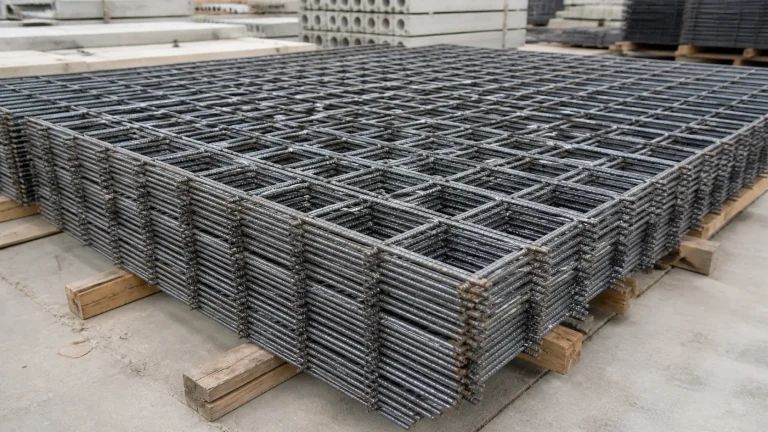
Sheets, rolls and the first selection question
The usual supply form is flat sheet. Sheets suit slab panels, walls, precast work, and areas where the planned geometry needs to stay stable during handling. Lighter meshes may also be supplied in rolls, which can simplify transport and placement in some applications but need sufficient control to avoid unwanted curl, overlap errors, or movement while the concrete is being placed. A project drawing and the local structural design requirements determine the reinforcement arrangement; a general mesh guide cannot replace that design.
Start by separating reinforcement mesh from the broader family described in our welded wire mesh product guide. A welded grid may be used for fencing, baskets, machine guards, or reinforcing, but the required mechanical properties, tolerances, and documentation change with the application. The purchase description should therefore state the intended construction use and the governing drawing or schedule.
What a usable specification should identify
A reliable request normally identifies wire diameter or nominal wire size in both directions, center-to-center spacing, sheet or roll dimensions, material grade or required properties, surface condition, and the planned quantity. For rectangular patterns, list each direction separately rather than calling the mesh simply “heavy” or “standard.” Where panel edges, laps, openings, bends, or cut pieces matter, attach the detail drawing. Dimensions alone do not establish suitability if the wire property and reinforcement design are unknown.
It is also useful to state whether the mesh is expected to arrive flat, what amount of surface rust is acceptable for the project, and how it must be bundled. Packaging should preserve identification through transport, especially when more than one mesh pattern arrives on the same job. These ordinary controls make it easier to compare quotations using the same logic outlined in a comparable wire-mesh RFQ.
Why weld quality and geometry both matter
The crossing points give welded reinforcement mesh its layout stability. A weak, damaged, or inconsistent intersection can create handling problems before placement, while the wrong spacing can put reinforcement in the wrong location even if every weld looks tidy. Inspection therefore combines visual and dimensional checks: look for obvious broken welds, severe distortion, contamination, edge damage, and mixed patterns; then measure enough wires and openings to confirm the delivered grid matches the approved data.
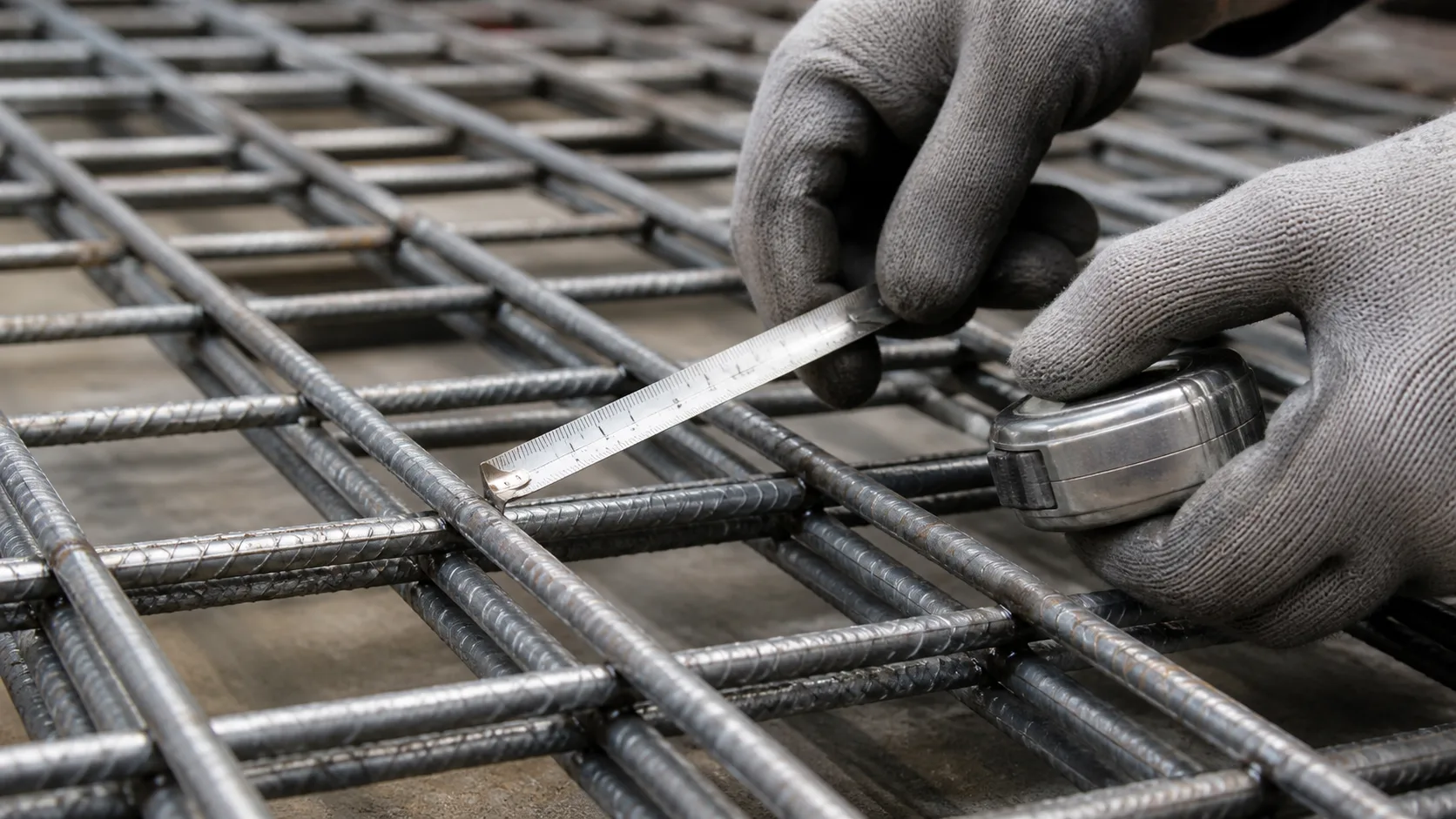
For production or procurement teams, a practical distinction is between a shop check and a design acceptance. A shop check confirms identity, count, size, and visible condition. Structural acceptance belongs to the responsible project process and its test or certification requirements. Keeping those two decisions separate prevents a receiving team from making claims beyond its authority.
Handling, laps and site coordination
Once mesh reaches the site, placement is as important as the product itself. Sheets need adequate support so that they remain at the intended cover and do not sink during concrete placement. Laps, offsets, cuts around penetrations, and connections to other reinforcement should follow the applicable project detail. Do not assume that two adjacent panels only need to touch: the required overlap and positioning are design decisions.
Mesh can be efficient because it is repeatable, but it is not automatically forgiving. Incorrect panel orientation, a missing lap, a substituted wire pattern, or a heavily bent sheet can negate the speed advantage. Receiving teams can use the same disciplined sequence as the wire mesh receiving inspection checklist: confirm paperwork, verify product identity, measure critical geometry, record condition, and isolate questionable bundles before they are incorporated.
Buyer checklist before release
Before approving a shipment, compare the label, drawing reference, mesh pattern, panel dimensions, quantity, and certificates or test records required by the project. Photograph representative bundles and any damage. For repeat orders, retain one approved sample record so a later shipment can be checked against a known baseline. That small record is often more useful than a generic product photograph when a difference is discovered after delivery.
Welded reinforcement mesh is best purchased as a defined structural input: a clearly identified grid, a documented material requirement, and a controlled placement plan. With that approach, it remains distinct from ordinary welded mesh and supports faster, more auditable construction work.