
Barbed wire consists of one or more line wires with regularly formed barbs. It is used as part of agricultural, boundary, and security fence systems where the application and local rules permit it. It should be specified and installed as a controlled system, with attention to handling safety, warning requirements, posts, tension, and the intended animal or perimeter use.
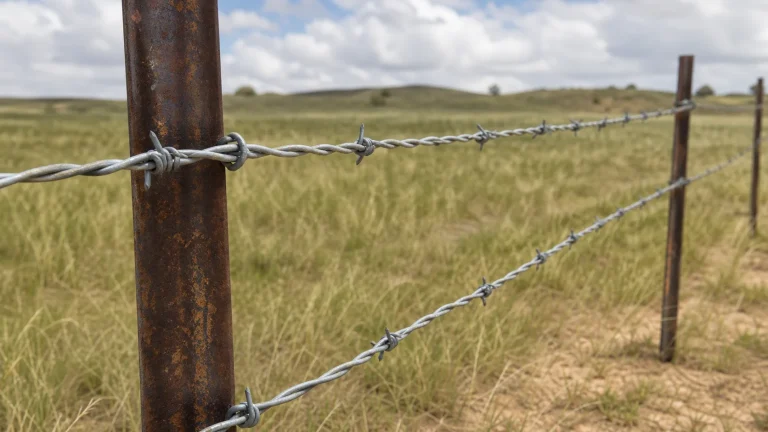
Construction and finish matter
Identify line-wire construction, wire diameter, barb arrangement, spacing, material, coating, coil length, and any required finish. Galvanized options are common, but the coating route and intended exposure should be stated. Barbed wire is not razor wire; the two products have different construction, safety implications, and procurement requirements.
Use it as part of a fence design
Posts, strainers, anchors, tension, gates, visibility, and site safety determine whether a fence line performs as intended. It is not appropriate to choose a product solely by a generic roll description. The chain link fence guide provides a useful contrast: every fence system depends on framework as well as infill.
Put the required geometry, coating, packing, and delivery condition in a structured RFQ. At receipt, record coil identity, finish, damage, and safe handling condition using the receiving inspection checklist. Read our editorial approach or use the contact page for a future fence guide.