
Livestock field fence is a woven fence system with horizontal line wires and vertical stay wires, often using smaller openings near the bottom. It is designed for agricultural boundaries and animal-management applications, but the correct design depends on species, pressure, terrain, gates, posts, tensioning, and local requirements.
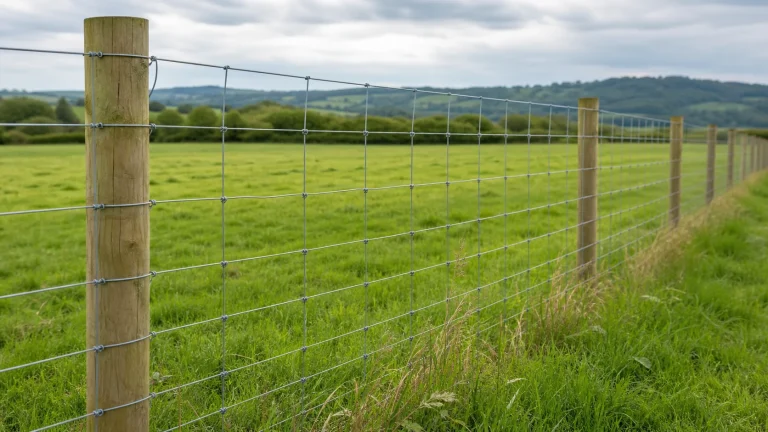
Read the fence geometry
Specify height, number of horizontal wires, opening progression, line-wire and stay-wire construction, coating, roll length, and the required fence layout. The smallest openings are often placed lower where containment or exclusion needs are greater, but the selected pattern must match the intended use rather than a trade name.
System installation controls performance
Terminal posts, braces, line-post spacing, tension, ground profile, and gates all affect a woven fence run. A good roll cannot compensate for weak corners or inadequate straining. For a different flexible fence form, see the chain link fence guide; for light hexagonal enclosure mesh, see hexagonal wire netting.
State the complete requirement in an RFQ and inspect roll identity, dimensions, coating, damaged edges, and packing at delivery with the receiving inspection checklist. Use the contact page to suggest the next agricultural fencing topic.