
Choosing between 304 and 316 stainless steel wire mesh begins with the environment the mesh will actually encounter. Two rolls can have the same weave, aperture and finish while differing in alloy chemistry. They may look almost identical on arrival. The useful question is therefore what the mesh must withstand throughout operation, cleaning, storage and maintenance, followed by how the supplier will document the ordered material.
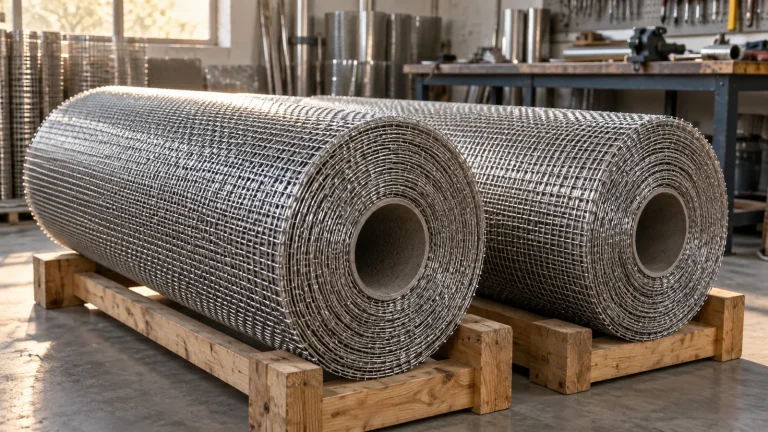
What changes between the two material families?
Both are widely used austenitic stainless steels. The 316 family includes molybdenum, which generally improves resistance to localized corrosion in chloride-bearing conditions compared with conventional 304. This is a reason to consider 316, not a guarantee of suitability in every saltwater or chemical application. Exact grade designations and product specifications still matter.
Mesh manufacturer BOPP identifies 304 and 316 among its common weaving materials. That establishes their relevance to wire cloth, but material availability is only the starting point. The intended mesh may need particular wire dimensions, fabrication, surface condition and traceability that a general stainless sheet specification does not describe.
Describe exposure before asking for a grade recommendation
Prepare an exposure brief covering the fluid or atmosphere, temperature range, duration of contact, deposits, cleaning chemicals and rinse conditions. For outdoor mesh, include sheltered versus rain-washed locations and likely salt deposition. For a process screen, include both normal operation and shutdown conditions. A dry, clean interior and a warm, deposit-covered chemical service should not receive the same material assessment just because both use woven mesh.
Outokumpu’s corrosion guidance explains that performance depends on chemistry and environment, including temperature, pH, contamination and design. Crevices and deposits can create particularly demanding local conditions. The practical implication for mesh buyers is to provide the exposure information to the supplier or materials specialist instead of requesting a universal chloride limit from a product name.
Three purchasing scenarios
For a dry indoor protective screen, a buyer may start by evaluating 304 against the application’s mechanical and appearance requirements. The quotation should still identify the alloy and geometry, and should include any washdown exposure. The word indoor alone does not tell a supplier whether the screen sits beside a corrosive cleaning process.
For an exposed coastal installation, comparing 316 with 304 is sensible, but the review should include drainage, access for cleaning, salt accumulation and the required appearance over time. Outokumpu’s atmospheric corrosion guidance discusses these exposure differences. Avoid translating the phrase marine grade into a promise of maintenance-free performance.
For chemical filtration, neither grade should be approved solely through a two-column comparison. Ask for the actual chemical mixture and concentrations, temperature, cleaning regime and consequences of contamination. If service compatibility remains uncertain, agree on the assessment or trial needed before a production order. Those decisions belong alongside the media construction described in our sintered mesh guide, not after the filter has been fabricated.
Keep material choice separate from mesh geometry
Upgrading an alloy does not correct an unsuitable aperture or support arrangement. A 316 cloth with the wrong opening may miss the separation requirement just as a 304 cloth would. Compare like-for-like constructions when evaluating a material premium: wire diameter, count, weave, width, quantity, surface condition and documentation should all be aligned.
Conversely, changing wire diameter to reduce price changes opening or count, depending on which dimension is held fixed. Require the supplier to identify every proposed substitution. Our woven mesh construction guide explains the structural choices, while the alloy decision addresses a different part of the specification. A purchasing comparison should show both explicitly.
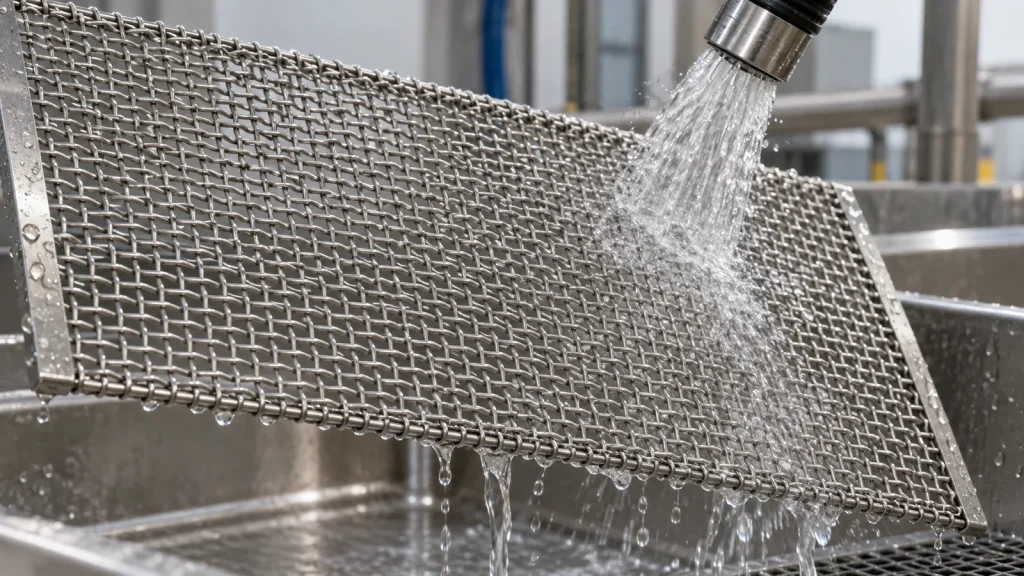
Cleaning, fabrication and handling need their own instructions
Record the cleaning products and approved concentrations, contact times and rinse requirements in the equipment procedure. A supplier may confirm a material against the process fluid but never have been told about the cleaner. Include that second exposure in the approval request. For a removable mesh insert, also consider how it is handled between uses and where residues could remain.
Our recommended procurement practice is to request a finished-part surface condition rather than simply the raw alloy name. Clarify welding, edge finishing and any specified post-fabrication treatment. Protect clean stainless mesh from dirty handling equipment and unsuitable shared storage. If discoloration appears, document its location and service history before assuming it proves a wrong alloy. Surface contamination, fabrication condition and the operating environment need to be considered together.
Why appearance and a magnet do not certify the grade
A bright silver finish cannot reliably distinguish 304 from 316. Magnetic response is also affected by material condition: the British Stainless Steel Association’s magnetic-properties guidance discusses changes associated with cold work. Drawn and woven wire should therefore not be accepted or rejected as a particular alloy based only on a simple magnet test.
Instead, decide the evidence needed for the application. Match supplier material documents to the order and delivered lot, and define whether independent alloy verification is required. Any test method needs to be suitable for the wire size and the question being asked. A test of one accessible component does not automatically identify every wire, frame and fastener in a fabricated assembly. Keep the scope of the inspection explicit.
What to put in the purchase order
Specify the full material designation and applicable product requirement, then the mesh geometry, dimensions, fabrication drawing and surface condition. List the traceability and inspection documents expected at delivery. If low-carbon or another specific variant is required by the design, state it; do not treat a short commercial grade label as permission to substitute. Ask suppliers to flag any departure in the quotation.
The structure in our RFQ guide helps make these offers comparable. On arrival, use the receiving checklist to connect labels, documents, geometry and visible condition. A retained record should make it possible to identify which lot went into which assembly.
The final choice should be justified by the service brief and documented supply requirements. Price comparisons are most useful after those requirements are aligned; a small saving on mesh can be outweighed by replacement labour, lost production or cleaning difficulties. A clear approval record also makes the next order easier, because the team can see which assumptions were accepted and which conditions would require a fresh review.