
Woven wire mesh is made by interlacing lengthwise and crosswise wires. Unlike welded mesh, its intersections are not joined by a weld; the weave itself gives the fabric its geometry, flexibility, and surface profile. The construction can be coarse and robust for screening or fine and controlled for filtration, but the word “woven” alone does not establish suitability.
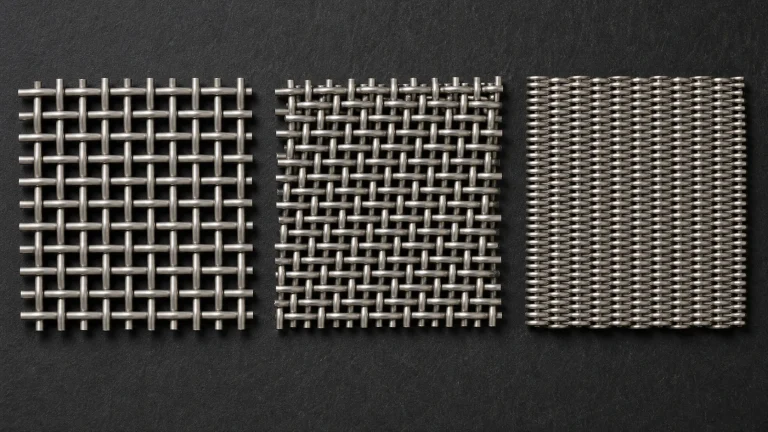
Plain weave: the common starting point
In plain weave, each warp wire alternates over and under successive weft wires. It produces a regular, stable pattern and is widely used where a square or near-square opening is required. It is often a practical starting construction for general screening, guards, baskets, and many filter-support uses.
Plain weave does not mean every product has the same opening or flow behavior. Wire diameter, mesh count, material, width, and finish remain separate specification fields. The wire mesh classification guide explains why construction is only the first part of identifying a mesh.
Twill weave and Dutch weave change the balance
Twill weave lets a wire pass over and under more than one crossing wire in a repeated pattern. This can accommodate relatively heavier wires or finer constructions than a comparable plain weave. The visible diagonal pattern is a consequence of the interlacing arrangement, not a quality mark by itself.
Dutch weave uses different wire counts or diameters in the warp and weft directions to create a dense structure. It is often selected where a fine, controlled filtration path or strong fabric is required. Terms such as plain Dutch and twill Dutch describe construction routes, but the order still needs a clear target specification and any required performance verification.
Specify the mesh without relying on a trade name
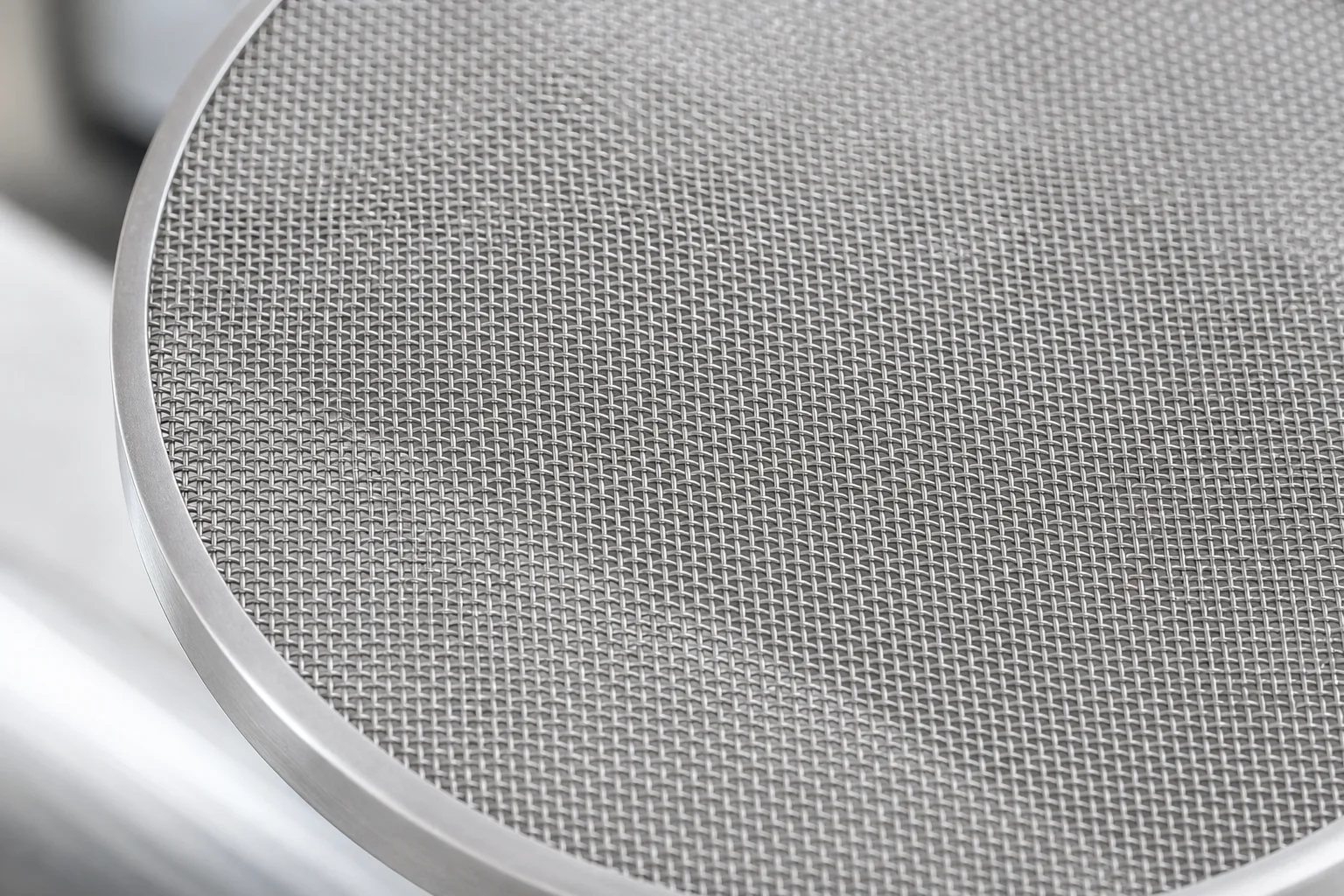
For woven mesh, record material grade, weave, mesh count where applicable, clear opening, wire diameter, width, length, edge condition, and supply form. Mesh count is not a universal replacement for opening: two meshes can share a nominal count while using different wires and producing different clear spaces. If a drawing or approved sample controls the requirement, cite its revision in the order.
The same discipline makes supplier responses comparable. Our wire mesh RFQ guide shows how to request the material, dimensions, tolerance, finish, packing, and inspection assumptions without leaving important fields implicit.
Choose by the job, then inspect by the requirement
A coarse woven screen, a filter disc, and an architectural insert may all use woven mesh but need different acceptance criteria. Consider particle size or flow need, load and handling, corrosion exposure, cleaning method, edge treatment, and whether the material will be cut, framed, formed, or layered after delivery. For a direct comparison with rigid mesh, see welded wire mesh versus woven wire mesh.
At receipt, verify the actual construction and dimensions against the order, then document condition, packing, and traceability before release. The wire mesh receiving inspection checklist provides a practical sequence. Use the contact page to suggest the next weave or filtration topic.