
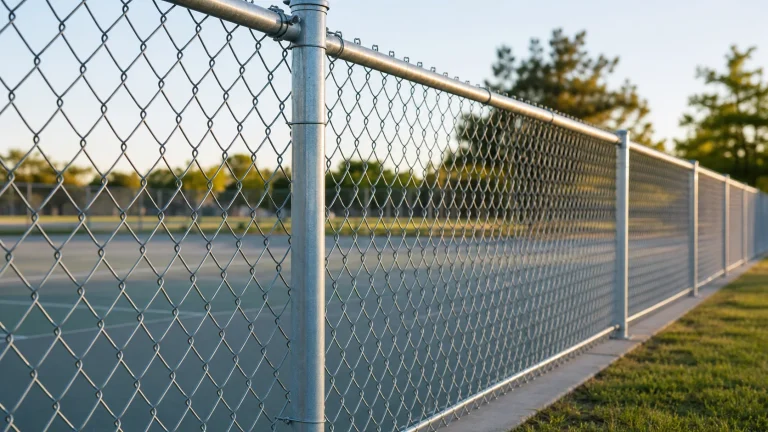
Chain link fence mesh is made from wire formed into interlocking diamond-shaped openings. It is widely used because it combines visibility, flexibility, repairability, and system-level adaptability. The mesh itself is only one part of a working fence: posts, rails, braces, tension bars, bands, ties, gates, foundations, and finish choices all affect performance.
Identify the mesh before comparing prices
A useful description states mesh opening, finished wire diameter, fence height, roll length, material, coating, and selvage. The diamond opening influences visibility and containment; the wire diameter contributes to stiffness and durability; height and framework depend on the boundary purpose and local design requirements. A quote that says only “galvanized chain link” leaves too many assumptions open.
Chain link is neither welded mesh nor hexagonal netting. It uses a continuous interlocking diamond pattern, which gives it flexibility and allows it to follow some site variation. The broader difference between flexible and rigid mesh constructions is introduced in the wire mesh classification guide.
Choose wire and finish for the environment
Galvanized steel is common, while polymer-coated systems are often selected where colour, added surface protection, or a specific visual result is required. The final decision should consider exposure, abrasion, cut or terminated ends, maintenance access, and the expected life of the whole system. It is not enough to compare a nominal coating description without confirming whether dimensions refer to base wire or finished wire.
Any purchase specification should make the finish, wire size, mesh opening, selvage, and framework responsibility visible. The same fields belong in a structured supplier request, not in an informal one-line enquiry; see our comparable wire mesh RFQ guide.
Treat the framework as part of the fence
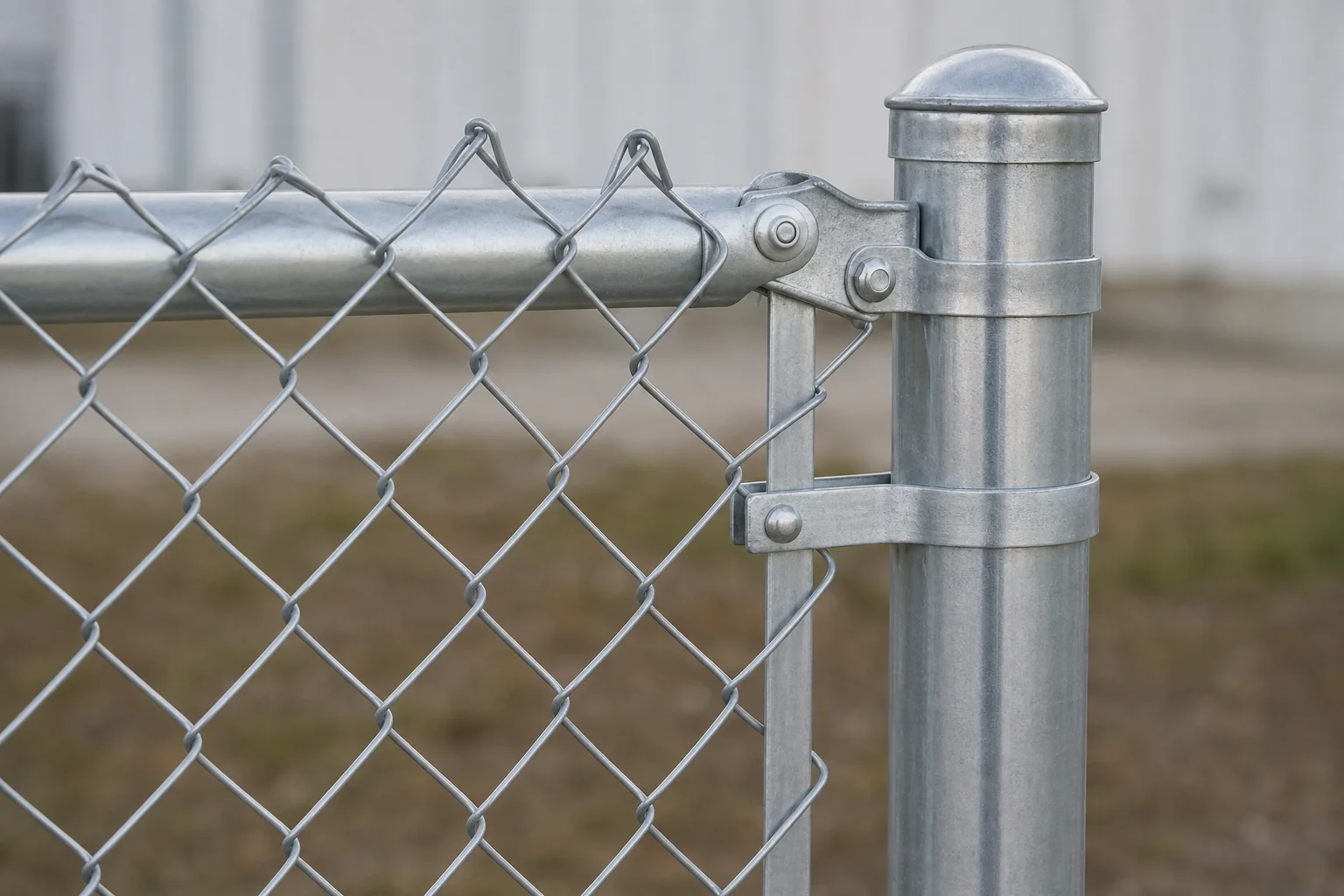
Terminal posts carry end, corner, and gate loads. Line posts support the run between terminals. Top rails, braces, tension bars, bands, and ties hold the mesh in position and distribute force. A heavier mesh cannot compensate for poorly selected posts, inadequate bracing, or loose tension. For high-security, sports, animal, or public-boundary work, the fence design should be set by the relevant project requirements rather than a generic product description.
Installation and acceptance checks
At installation, inspect line and terminal alignment, post foundations, rail continuity, mesh tension, secure ties, gate clearance, and any gaps at grade. At receiving, check roll identity, mesh opening, wire finish, roll-edge damage, and the supplied hardware against the order. The receiving inspection checklist provides a controlled way to document those observations before material is released.
Chain link is a versatile fence mesh, but it should be selected as a system, not as a roll of wire in isolation. For more practical product and sourcing guidance, see our editorial approach or use the contact page to suggest the next fence topic.