
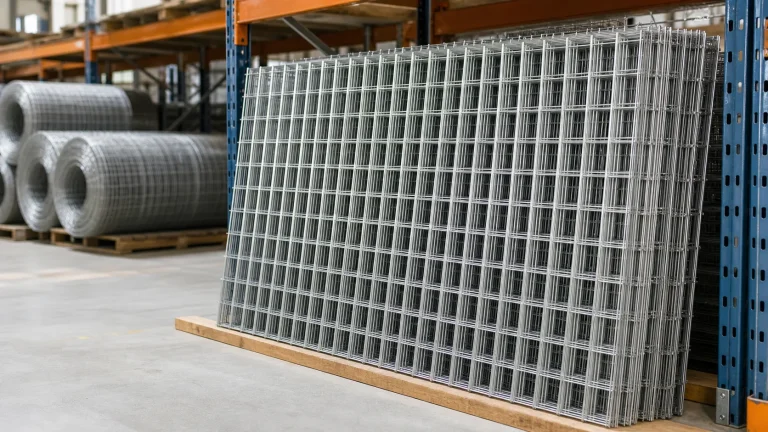
Welded wire mesh is formed by arranging wires in two directions and joining them at intersections. It can be supplied in flexible rolls, rigid sheets, reinforcement panels, fence panels, guards, baskets, and fabricated components. Its stability comes from the welded joints, so its geometry and handling differ from woven wire cloth.
Product form changes the practical requirement
Roll mesh can be convenient for field installation, animal enclosures, and light barriers. Panel mesh can provide a flat, rigid starting point for guards, fencing, racks, cages, and fabrication. Reinforcement mesh is selected by the relevant construction design rather than visual similarity to a fence panel. A buyer should state the intended form of supply before comparing quotations.
The wire mesh classification guide places welded mesh within the wider mesh family; the key distinction is that welded joints create a different stiffness, edge condition, and failure mode from woven intersections.
Build the specification from measurable fields
State material, wire diameter, opening, panel or roll dimensions, weld requirement, edge condition, finish, quantity, and packing. If coating applies, clarify whether measurements refer to base wire or finished wire. When flatness, burrs, projection length, or corner condition affect assembly, record the acceptance limit rather than leaving it to visual judgement.
For fencing and fabricated products, include the required product form, bends, framing, clips, posts, or other supplied hardware where appropriate. A simple request for “galvanized welded mesh” does not establish these variables. Use a controlled item table as outlined in our wire mesh RFQ guide.
Inspect the welds and the finished form
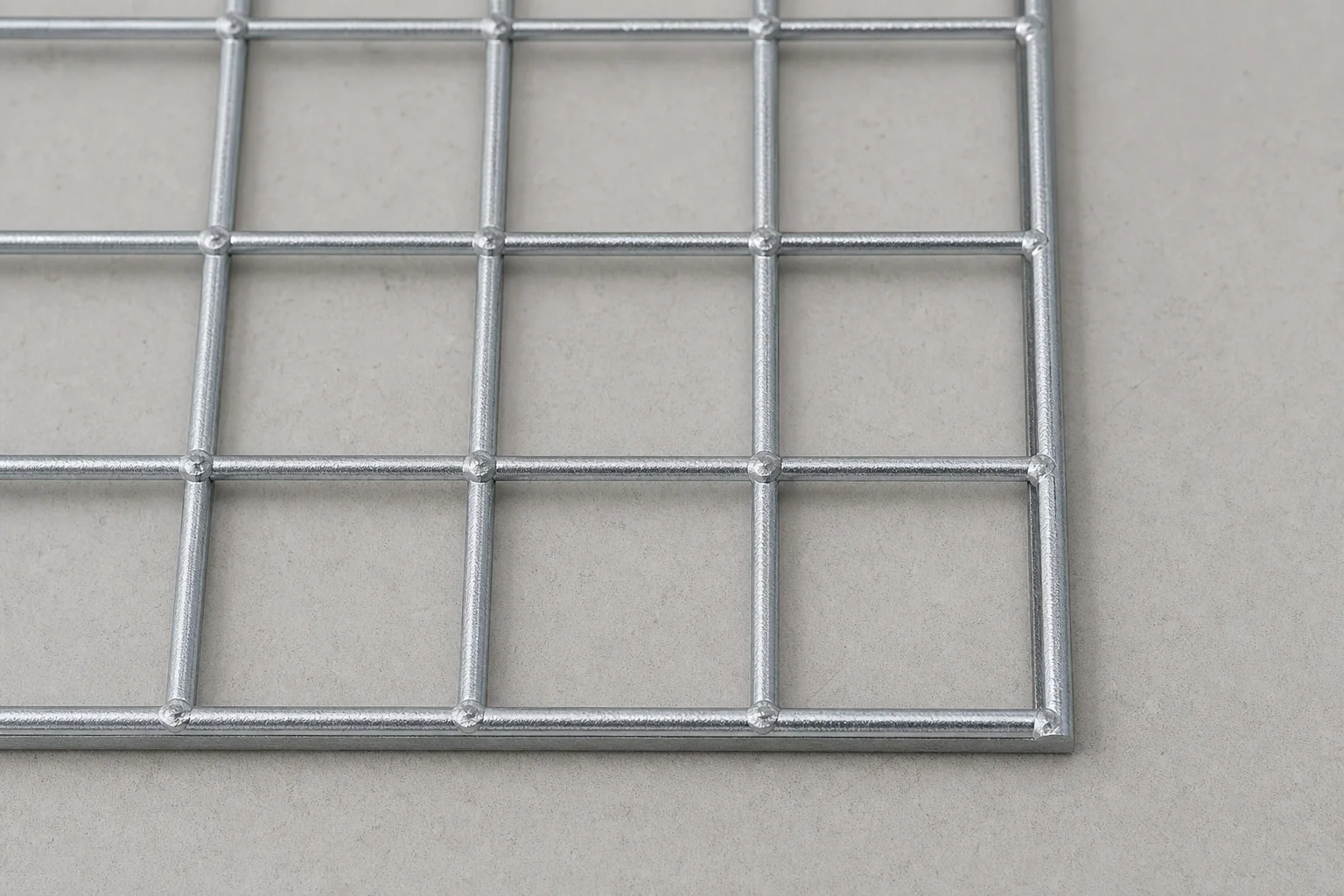
Inspect intersections required to be welded, overall opening geometry, finish continuity, cut edges, panel condition, and packing damage. A visual inspection can identify loose joints, severe distortion, missing intersections, sharp projections, or coating damage, but the final acceptance basis must come from the order, drawing, or agreed plan. Do not assume a photographed panel represents an entire shipment.
The receiving inspection checklist provides a structured way to document identity, dimensions, finish, edges, packing, and disposition. For guidance on when a woven construction may be a better fit, see welded versus woven wire mesh. Learn more about the site’s neutral editorial method in our approach.