
Expanded metal is made by slitting and stretching a metal sheet so that the material forms connected strands and diamond-shaped openings. It is not woven from wire, welded at intersections, or punched into separate holes. Because the strands remain connected, expanded metal can offer a useful combination of openness, directional strength, and rigid surface texture.
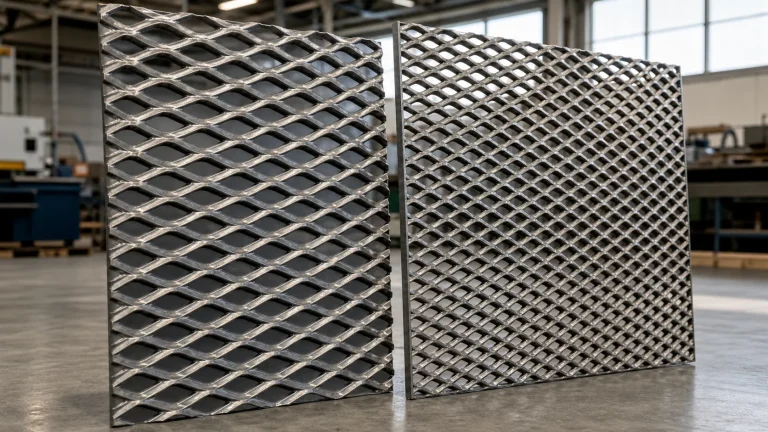
Raised and flattened are different finished forms
Raised expanded metal retains the three-dimensional profile produced by the expanding process. Its raised strands and bonds can provide grip and stiffness in uses such as walkways, guards, platforms, and protective surfaces. Flattened expanded metal is passed through a process that reduces the raised profile, producing a smoother sheet for uses that need a flatter face or different handling characteristics.
The material, sheet thickness, strand dimensions, bond geometry, opening size, orientation, and finished sheet size all affect the result. The wire mesh classification guide distinguishes expanded metal from wire-based meshes and perforated sheet because the manufacturing route is part of the product identity.
Read the opening and strand information carefully
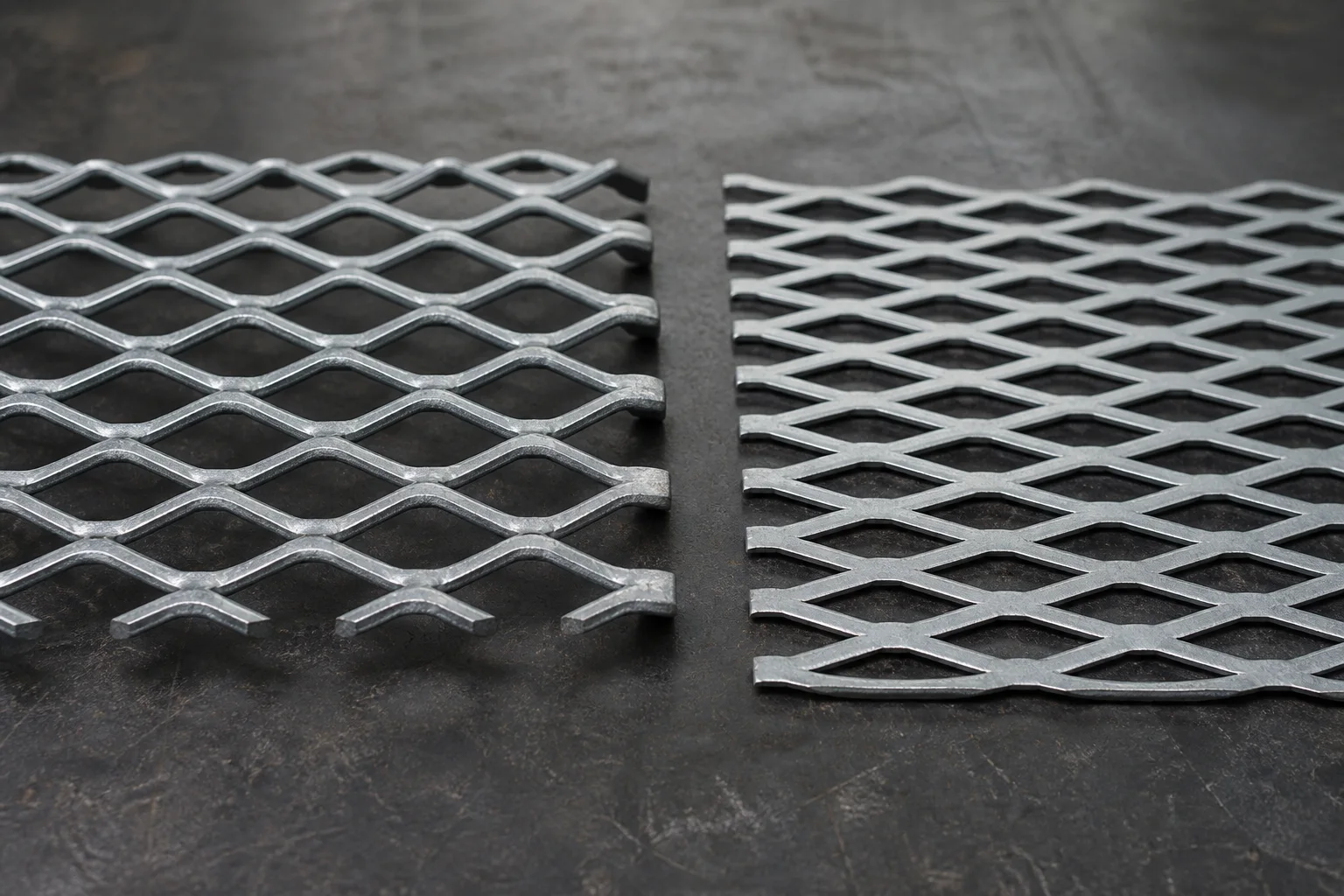
Expanded metal descriptions commonly include long-way and short-way opening dimensions, strand width, strand thickness, overall sheet size, and whether the product is raised or flattened. Terminology may vary between suppliers, so an order should include a drawing, sample, or explicitly defined measurement basis when fit or load is important.
Do not compare a nominal diamond size alone. Two sheets can have similar-looking openings while differing in strand size, thickness, profile, material, weight, and usable area. A structured wire mesh RFQ should make those variables visible before pricing.
Applications and limits
Expanded metal appears in guards, walkways, ventilation covers, machinery protection, architectural surfaces, security infill, shelving, plaster support, and fabricated components. The required material and finish depend on exposure, abrasion, load, fabrication steps, cleaning, and appearance. A product used as a pedestrian surface or safety guard needs project-specific engineering and safety criteria; a decorative insert may prioritize flatness, finish, and cut-edge quality instead.
The welded versus woven mesh guide is useful for understanding why expanded metal should not be substituted with a wire mesh merely because both have openings.
Receiving checks
At receipt, confirm product identity, material and finish documentation where required, raised or flattened form, opening orientation, sheet dimensions, strand condition, cut edges, and packing damage. Record sharp burrs, deformation, coating damage, and sheet-to-sheet variation against the agreed requirement. Use the receiving inspection checklist for a repeatable evidence record, or use the contact page to suggest a future perforated-metal or metal-lath guide.