
Anping, China has long been synonymous with wire mesh production. The more interesting story now is not simply how much mesh the cluster makes, but how it is trying to earn more value from every kilogram of wire, every square metre of screen, and every export order.
According to a February 2026 report by People’s Daily Overseas Edition, Anping’s wire mesh industry generated RMB 115.1 billion in output in 2025 and sold into more than 190 countries and regions. The report also describes a product base of more than 400 types and 6,000 specifications. Those figures show scale, but the report’s more useful insight is the cluster’s response to a familiar industrial problem: too many suppliers competing on similar products and price.
Scale alone does not solve commodity pressure
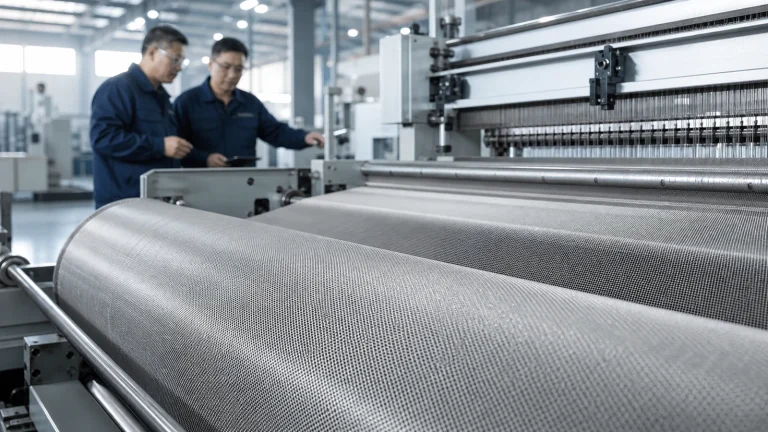
Anping’s depth remains a major sourcing advantage. Buyers can find drawing, weaving, welding, fabrication, coating, packaging, logistics, and trading capability in a compact manufacturing ecosystem. But a large cluster can also produce a crowded field of look-alike offers. The People’s Daily report describes an earlier period in which small firms concentrated on ordinary fence mesh, then competed by cutting price while high-quality inputs and high-value processing remained outside the local chain.
That pattern is relevant well beyond Anping. A catalogue may contain hundreds of mesh products, but a buyer still has to distinguish a standard roll from a product designed for a defined duty cycle, corrosion environment, filtration target, print process, or safety requirement. Our earlier analysis of Anping’s historical wire mesh cluster explains why the area became such a broad manufacturing-and-trade hub. The current development story is about what happens when that hub starts moving upstream and into more demanding applications.
The upgrade starts with materials and process control
The report points to investment in advanced filtration materials, including a wire-mesh composite high-throughput membrane and metal-fibre felt production line intended for applications such as environmental protection, new energy, biomedicine, aerospace, and nuclear power. The significance is not the project name; it is the manufacturing direction. Value moves when mesh becomes part of a functional material system rather than an interchangeable finished good.
For procurement teams, that shift changes the first questions to ask. Instead of requesting only a mesh count and roll size, define the full material and performance chain:
- What is the base alloy or wire grade, and what documentation supports it?
- Which process controls govern wire drawing, annealing, weaving, sintering, coating, or lamination?
- What tolerances apply to aperture, wire diameter, thickness, permeability, flatness, and surface condition?
- Which production and inspection records travel with the batch?
These are the same practical boundaries we set out in our editorial standards: regional reputation can help a buyer find capable suppliers, but it cannot replace a current drawing, material specification, approved sample, and inspection plan.
Precision mesh is a different product conversation
One example in the report is a high-precision stainless steel printing screen for photovoltaic-cell production. The article describes collaborative research around very fine wire, high mesh counts, and tight thickness and aperture-uniformity targets. It reports that a local team completed a qualifying production run in 2025 after repeated trials, lowering the reported cost of the domestic product.
This is a useful case because high-precision mesh is not simply “more mesh per inch.” Its performance is tied to the interaction of wire diameter, weaving tension, mesh geometry, surface quality, cleanliness, thickness stability, and the customer’s downstream process. A screen that appears correct on a basic visual check may still behave differently in printing, filtration, separation, or other controlled applications.
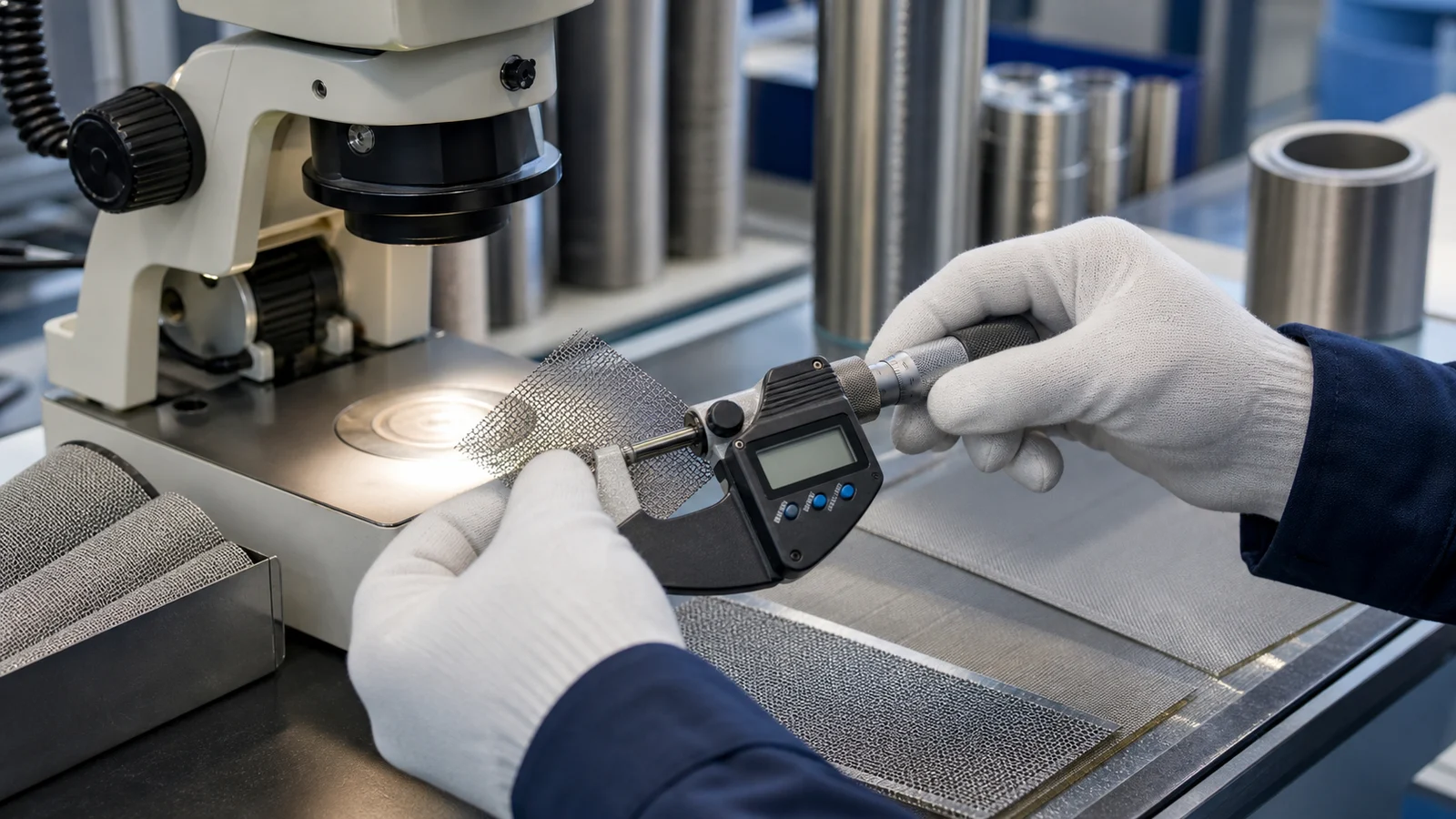
For a high-value specification, sampling should therefore include more than a small cut piece. Ask how the supplier will measure the defined characteristics, what sampling plan will be used across a full roll or production batch, how non-conforming material is identified, and which changes require customer approval. If an application is safety-critical, medical, energy-related, or tied to a validated process, independent testing and engineering review remain essential.
Shared research can reduce a cluster’s innovation barrier
The People’s Daily report describes a local “crowdfunded research” model that brought together research institutions and upstream and downstream companies to share investment and risk around difficult projects. The idea is practical: smaller specialist firms often know the process problem but cannot independently absorb a long development cycle, equipment modification, and the possibility of failure.
For buyers, collaborative R&D should not be treated as a blanket quality signal. It can, however, be a useful indicator to investigate. A supplier involved in an application-specific development project may have a clearer grasp of process capability, measurement methods, and the limits of a product. The right follow-up is still evidence: ask for the scope of the product being offered, the current production status, the applicable specifications, and the exact test records available for the supplied batch.
Upstream integration matters when wire cost and availability move
The report also highlights new upstream integration in stainless wire rod and a collective purchasing approach intended to consolidate demand, lower material costs, and reduce inventory pressure. This addresses a recurring vulnerability in wire-mesh supply: the conversion plant may be local, while the most important material input is exposed to outside price and availability swings.
An integrated or well-coordinated upstream base can improve planning, but a quotation should still state how material volatility is handled. Buyers should agree the material grade, the price-validity period, substitution rules, lot traceability, and the approval process for any change to the wire source. A low offer without those controls can become expensive once lead time, coating performance, or product consistency matters.
Digital trade and local service are becoming part of the offer
For international customers, the report’s export section is equally important. It describes trade-show access, overseas warehouses, local service points, policy support, and a digital platform designed to show material-price, demand, and capacity information. These developments reflect a move from simply shipping mesh to supporting faster discovery, consolidation, and fulfilment.
That can be valuable when an order combines multiple mesh formats, accessories, and delivery destinations. But a digital match or a trade-show conversation is only the start of supplier qualification. Confirm the legal seller, factory address, responsible quality contact, Incoterm, packing plan, export documents, inspection timing, and claims process before placing a production order.
What the next phase means for global buyers
Anping’s transition is a reminder that “China sourcing” is too broad a label for a technical product category. The best opportunity may be a supplier that can demonstrate a stable, ordinary mesh product with strong execution. In another case, it may be a specialist capable of developing a high-precision screen, advanced filter medium, or engineered fabricated component.
The right choice begins with the application, not the factory’s headline. Define the performance requirement, identify the material and process risks, request comparable evidence, and then match the supplier to the actual job. Readers can follow additional factory, material, and sourcing analysis on the Wire Mesh Guide homepage. If you have documented corrections or a source that adds useful context, please use our contact page.
Source note
This article is an independent analysis based on People’s Daily Overseas Edition’s February 13, 2026 report. Specific project, company, output, export, and technology figures are attributed to that reporting and have not been independently audited by Wire Mesh Guide.