
Perforated metal sheet is produced by creating a controlled pattern of holes in sheet material. Round, square, slotted, hexagonal, decorative, and custom openings can all be used, but the hole pattern is only one part of the product. Material, thickness, pitch, open area, margins, flatness, burr condition, and finished dimensions need to be considered together.
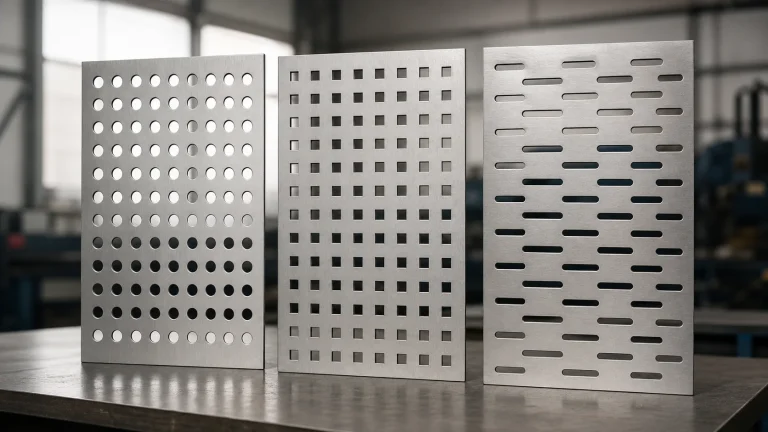
Hole shape affects function
Round holes are common for general flow, guards, acoustic surfaces, and decorative uses. Slots can provide directional drainage or retention. Square and hexagonal patterns offer different visual and structural arrangements. The right choice depends on the application’s flow path, retained particle shape, required strength, cleaning method, appearance, and fabrication plan.
Perforated sheet is not expanded metal: perforation removes material to form holes, while expanded metal stretches slit sheet into connected strands. See the expanded metal guide for that distinction.
Read open area with the rest of the geometry
Open area is a ratio derived from the pattern, hole dimension, pitch, and arrangement. It should not be compared in isolation from material thickness, sheet size, edge margins, and required strength. A screen or guard may need a specific open area, but it also needs adequate stiffness and a defined cut or formed edge.
State material grade, thickness, hole shape and size, pitch, arrangement, open-area requirement where relevant, sheet size, margins, finish, flatness, and burr expectations. The wire mesh RFQ guide gives a practical structure for those fields.
Inspection and fabrication
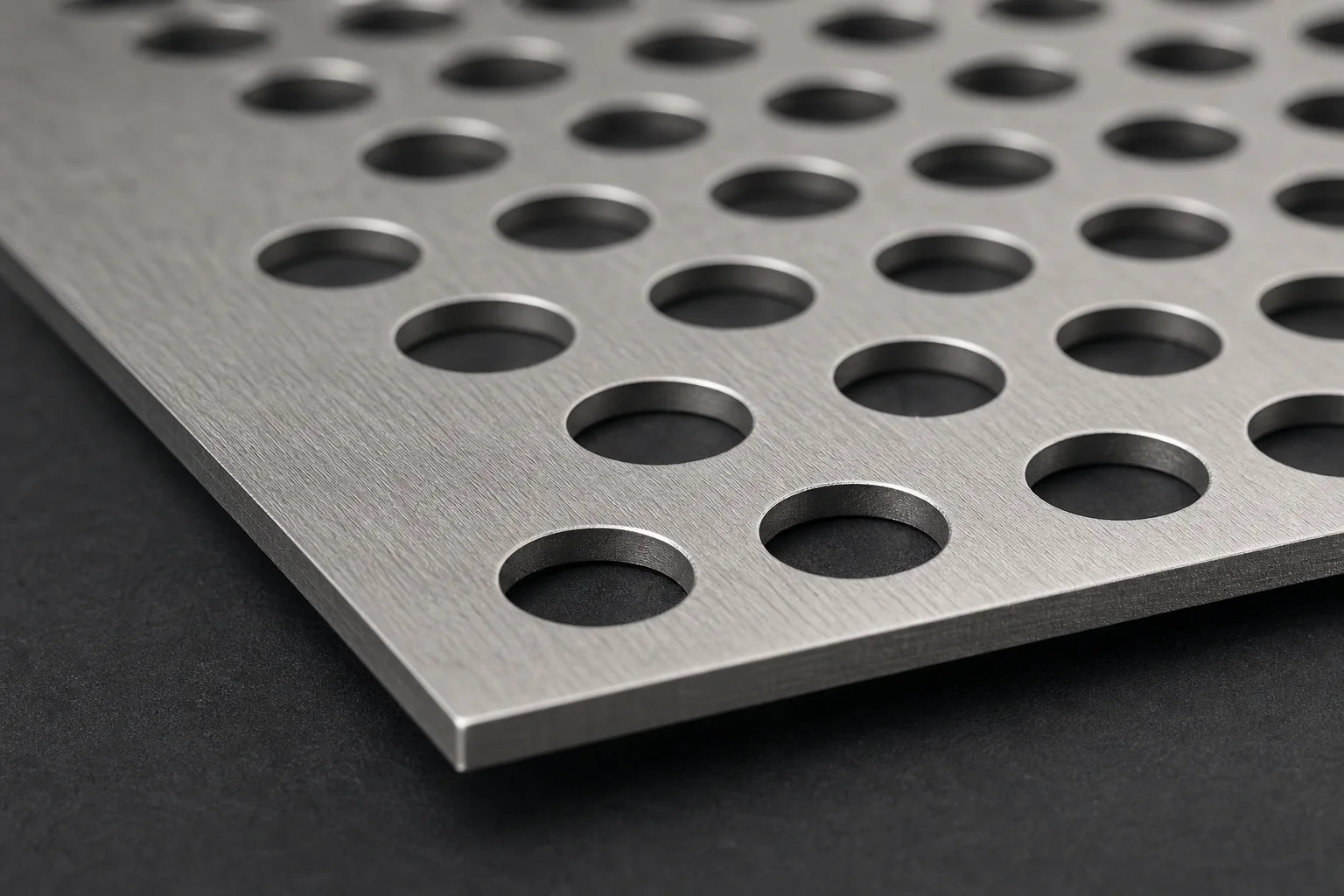
At receipt, confirm the pattern, sheet thickness, dimensions, finish, hole condition, margin, flatness, and packing protection. Burrs, distortion, scratched finish, or shifted patterns may matter more after the sheet is cut, bent, framed, or installed. Use the receiving inspection checklist to record condition before release. For wider context, see what wire mesh includes or use the contact page for a custom-perforation topic.