
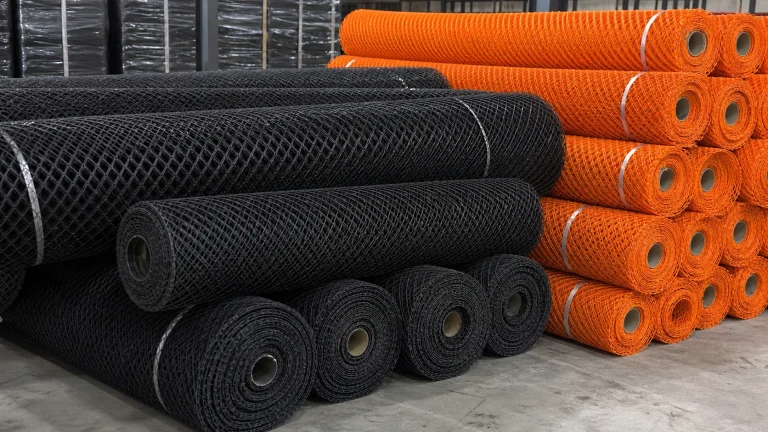
Extruded plastic mesh is made by forming polymer into an open grid, commonly supplied as rolls. HDPE, polypropylene, and other polymers can be used for protection, separation, packaging, animal applications, garden barriers, warning mesh, and light temporary fencing. The product’s polymer, grid geometry, colour, roll dimensions, UV exposure, and intended load must be specified together.
Product names cover very different duties
Safety mesh, plastic fence mesh, tree guard mesh, drainage separation mesh, and packaging net may all be extruded grids, but they are not interchangeable. Opening, strand profile, stiffness, tensile behavior, colour, environmental exposure, and installation method need to match the use. Do not infer UV durability or load capacity from colour alone.
Build a usable specification
State polymer, grid form, opening, roll width and length, colour requirement, intended service environment, fastening method, and any performance requirement. For outdoor use, record the expected exposure and design life. The wire mesh classification guide places plastic grids beside metal products while preserving their different material logic.
Use a structured RFQ and inspect identity, roll dimensions, damage, colour consistency, packaging, and lot records at receipt with the receiving inspection checklist. For a related agricultural boundary product, see livestock field fence, or use the contact page to suggest a plastic-mesh topic.
Choose by duty, not by colour
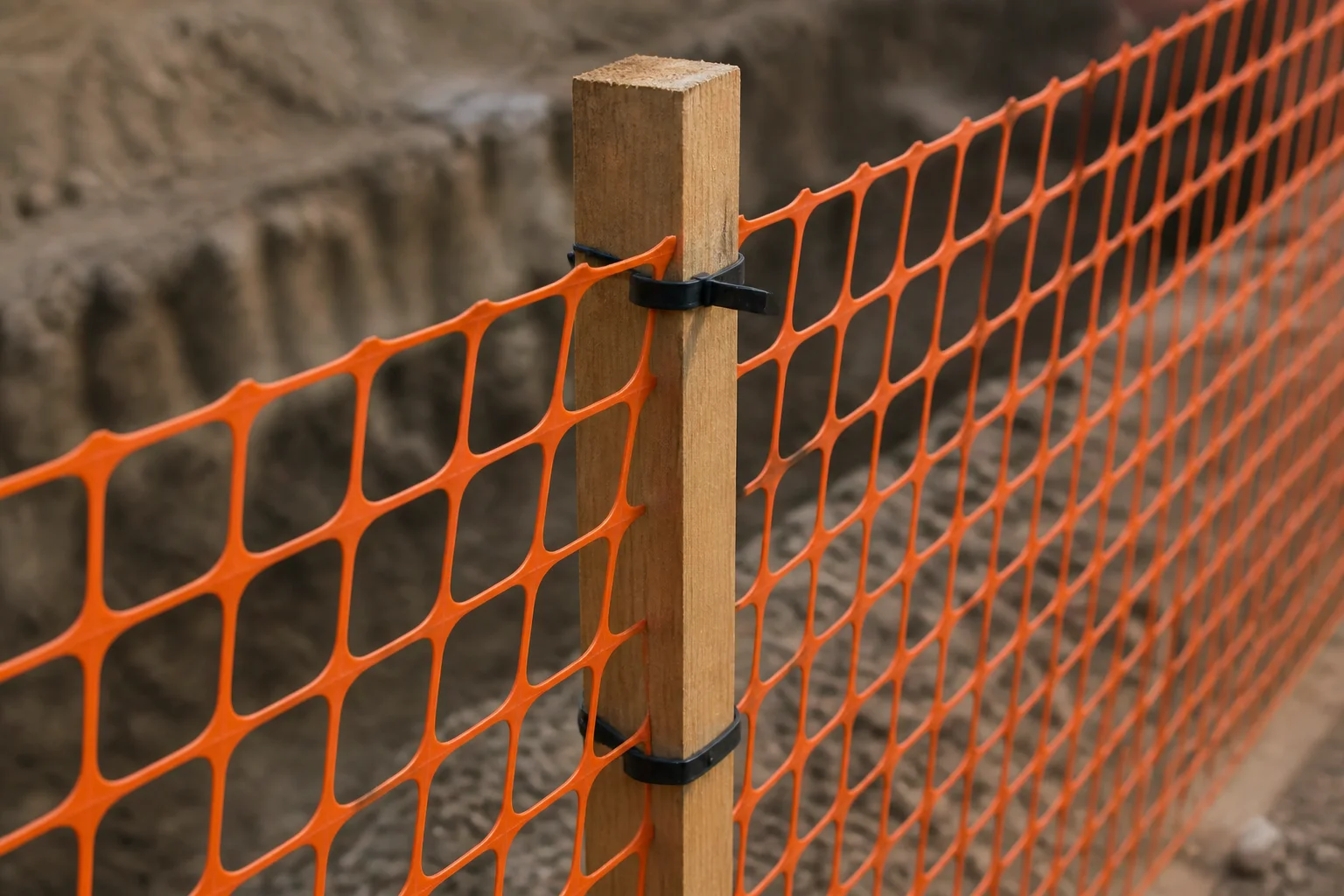
Extruded plastic mesh may be used for warning, separation, crop protection, packaging, temporary barriers, drainage-related protection, or light fencing. Orange is often associated with warning mesh, but colour does not establish UV stability, tensile behaviour, impact resistance, or suitability for public protection. The polymer, strand profile, opening, roll geometry, fastening method, exposure period, and intended load all need to match the job.
Temporary visual delineation is different from a load-bearing or security barrier. If a site requires controlled access, fall prevention, wind resistance, or crowd loading, the complete approved barrier design must govern selection.
Installation and receiving checks
Use compatible posts, ties, spacing, and tension for the product’s intended service. Avoid sharp edges that can cut polymer strands, and allow for site conditions such as sun exposure, wind, vehicles, and repeated handling. Store rolls away from avoidable heat and physical damage before installation.
At delivery, check polymer identity where specified, grid form, roll dimensions, colour consistency, damaged edges, packing, and lot records. Separate damaged rolls before they enter a work area.
Procurement checklist
State polymer, opening, roll width and length, intended exposure, colour requirement, fixing method, and performance requirements in a structured RFQ. Compare its intended duty with livestock field fence or metal mesh only where the application actually permits a substitution.