
Polyurethane screen panels are molded screening surfaces used where wear life, modular replacement or controlled separation make them attractive. A panel is not defined by its polymer alone. Aperture shape, thickness, reinforcement, fixing system and deck position determine how it behaves. A plant considering a change from wire cloth should compare the entire installed screen and its product results, not just the price of a panel.
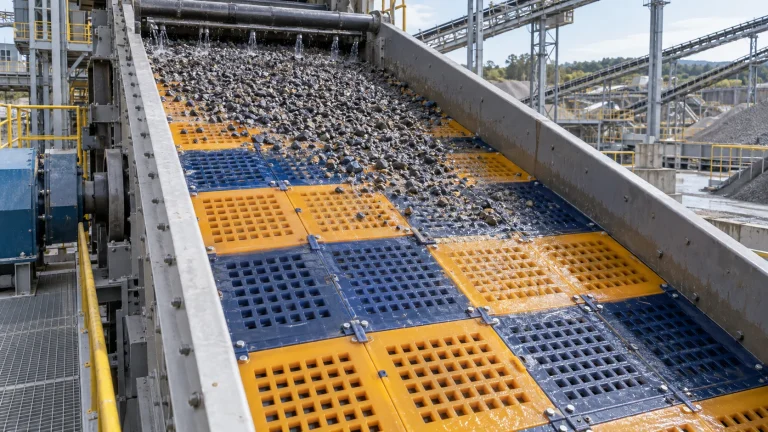
What makes a modular panel different?
Individual polyurethane modules fit a supporting deck through pins, rails or other proprietary fixing arrangements. A damaged module can often be changed without replacing the whole deck, but dimensions that look similar in a catalogue may not fit the same rail. Metso’s modular-screen description illustrates how panel size, fastening and local replacement work together. Treat the named system as an example, not a universal interface.
Wire cloth has a different construction and is often available in large tensioned sections. Our self-cleaning wire screen guide covers one alternative for sticky or near-size feed. The decision between polymer and wire depends on the material and the machine.
Specify aperture and the cut point separately
Square openings are commonly selected when controlling a size cut; slots may increase the passage of a suitable particle shape but can alter the amount of elongated material that reports to undersize. State aperture width, length, orientation and tolerances, then verify the supplier’s method for measuring molded openings. A nominal hole dimension by itself does not specify the resulting product grading.
Thickness and rib width affect the projected open area. A thicker wear surface can last longer in a particular duty while taking up more of the deck area and changing how particles approach an opening. Use our open-area explanation for the geometric principle, but do not apply its square woven-wire formula directly to a molded panel. Request the panel’s actual open-area figure and its measurement basis.
Match the material to wet, dry and impact conditions
Feed moisture, clay, maximum lump size, bed depth, drop height and temperature should be supplied with the RFQ. Polyurethane may be useful for abrasive wet screening, while flexible rubber or specially designed wire media can be better in some blinding duties. Metso’s mineral-processing handbook presents media choice as a balance among cut size, wear and service conditions, rather than a single best material.
Do not transfer a wet-screening success story to hot, chemically aggressive or dry sticky service without checking compatibility. Ask the panel supplier about continuous operating temperature, relevant chemicals and cleaning agents. If a supplier recommends a different polymer formulation, retain that formulation and its trial conditions in the approval record.
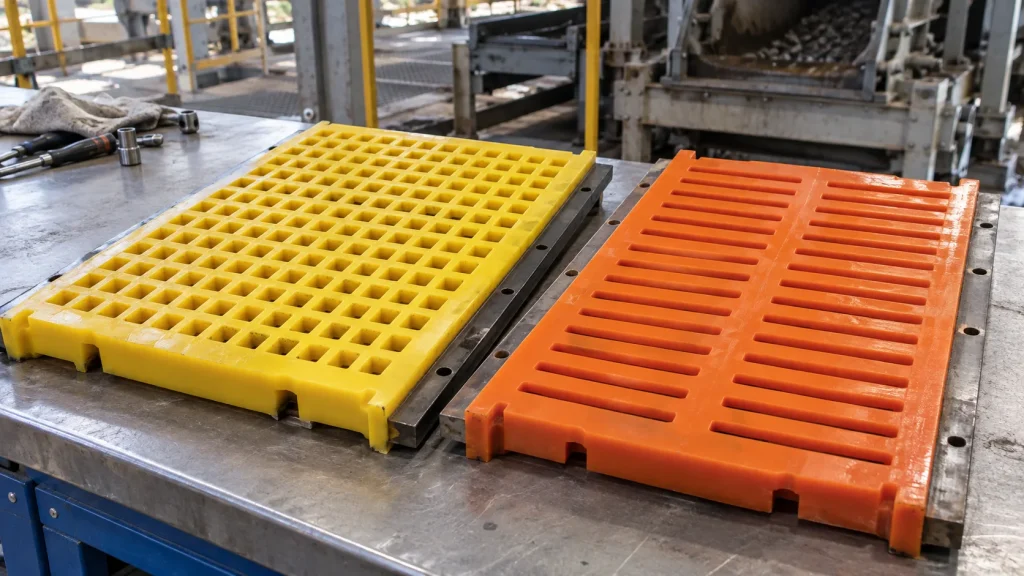
Deck position and reinforcement matter
The feed end may require a thicker or reinforced impact panel. A thinner or more open panel downstream may help recover near-size fines. Map the deck by position, panel code, aperture and installation date. Where mixed constructions are proposed, check the transition between modules; a step, gap or incompatible fixing can create bypass or accelerated edge damage.
Reinforcement can include embedded cords, steel elements or a rigid frame depending on design. The buyer should ask whether the quoted size and mass are for the complete reinforced module, and whether the support bars on the existing machine are suitable. An unsupported flexible surface can deform under load even when the material itself has adequate abrasion resistance.
Install and inspect the fixing system
Before installation, compare rail geometry, panel footprint, fixing direction and edge details with an approved drawing. Use the manufacturer’s specified sequence and tools. A panel that seats on one edge but rocks on another can lose apertures to trapped material, damage the attachment or shed pieces into the product. The site should isolate the screen before any adjustment and check all retainers after initial operation.
Inspect for edge lift, broken ribs, stretched openings, cut surfaces, hardening, loss of elasticity and uneven wear. If one row wears faster, check feed distribution and support condition before changing the entire material specification. Keep a map of failures and tonnes processed: the useful comparison is product quality and total operating cost per tonne, not calendar days alone.
Run a controlled comparison
Set a baseline for throughput, product grading, blinding, stoppage time and replacement hours before the trial. Change a defined deck zone or a complete deck according to the supplier’s design, then sample feed and product under comparable conditions. Record any changes to water addition, screen speed or crusher settings. Without that context, a reported capacity improvement cannot be attributed confidently to media alone.
Ask suppliers to state the expected wear mechanism and their proposed inspection interval. A useful trial agreement defines what failure looks like: loss of aperture integrity, unacceptable oversize contamination, excessive downtime or physical breakage. Include a safe spare-panel quantity and lead time so a successful trial does not create a supply bottleneck.
Write a comparable purchase and receiving specification
List machine and deck position, panel footprint, aperture geometry, polymer formulation, hardness if relevant, thickness, reinforcement, fixing rail, operating conditions and required documentation. Request a marked drawing and a reference sample. On receipt, check that labels, dimensions, openings, edges and attachment features match the approved version.
Use our receiving inspection checklist to connect samples and damage reports to the shipment lot, and our RFQ guide to expose substitutions. That record makes the next replacement order much less dependent on a technician remembering which panel happened to fit.